Digital Clutter Is Secretly Sabotaging Your Brain — Here Are 5 Powerful Ways to Fight Back
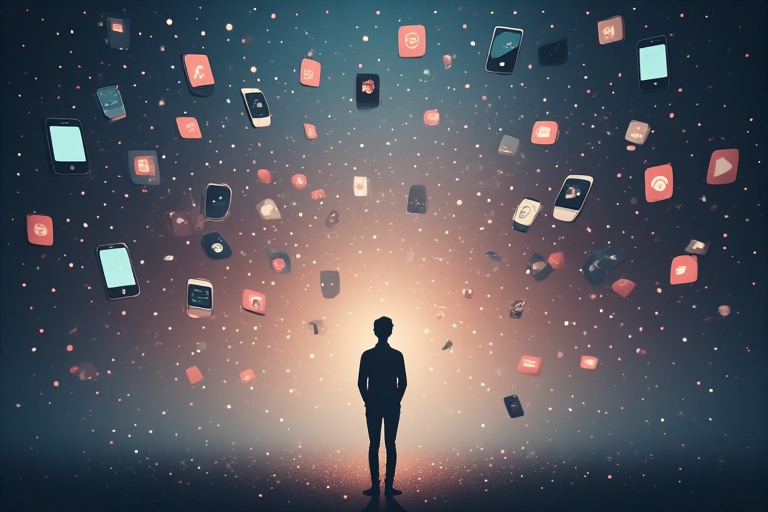
Digital clutter has become a mainstay of our daily lives and you probably don’t even realize it. Think of a typical morning. You wake up and before you even manage to roll out of bed, you’ve already got your phone in your hand.
You’ve got a dozen unread notifications that came in during the middle of the night. By 9am you’ve already got half a dozen browser tabs open and 37 unread emails that you have to deal with at some point today.
This is the new reality of our daily lives. We live in an age of infinite scrolling and overflowing inboxes. A world where our digital spaces have become just as cluttered as our physical ones if not more. Unlike a messy desk, digital clutter hides in plain sight. Subtly hijacking your attention and overwhelming your brain.
The Cognitive Cost of Digital Clutter
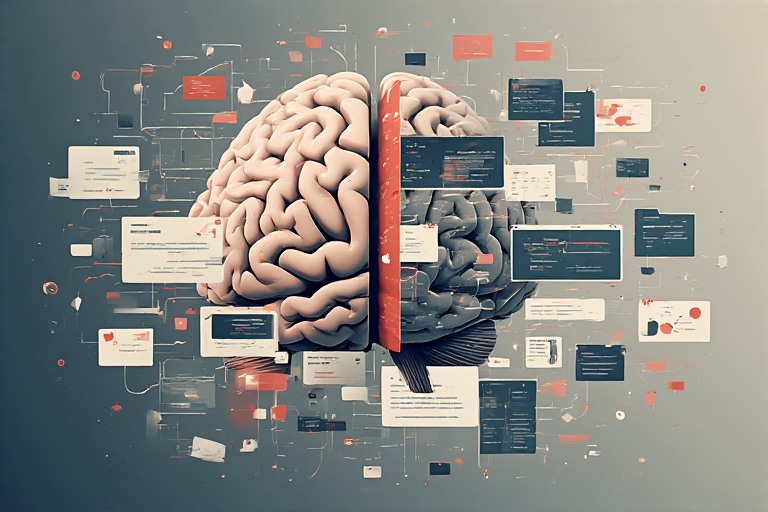
Let me tell you a bit about multitasking. Lots of people love multitasking. People who are seen multitasking are seen as being extremely productive and are often lauded for it. Whenever I hear someone being praised for their multitasking abilities, I roll my eyes.
Not because I disrespect the work that they do, but because multitasking is a myth! It’s one of the biggest lies ever sold to us! Our brain cannot multitask. Instead we do something known as ‘Context Switching’.
With context switching, your brain doesn’t just flip a switch every time that it needs to swap between tasks. It has to actively unload the context of what you are doing, reload the rules, the goals, and the details of the new task.
Neuroscientists call this “task-set reconfiguration,” and it happens in the prefrontal cortex. This is the part of your brain that is responsible for focus and decision making.
Yes, this context switch does seem instantaneous and that’s because our brains are miraculous computers capable of switching between things incredibly fast. However, even if the switch feels instant, there is always a measurable cognitive residue left behind.
Your brain is going to be still partly processing the previous task while trying to engage with the new one. Let me put forth a scenario for you:
You get to work, you work through dozens of emails, you have 6 meetings back to back, you don’t really accomplish anything, and nothing that you did was particularly difficult. Yet you feel mentally exhausted.
This is because you weren’t just working. You were constantly paying a switching tax, over and over, all day long.
This switching tax comes back to haunt you in the form of digital clutter all day long. When you switch browser tabs and you have something up unrelated to the work you are currently working on, you get hit with the switching tax.
When you decide to check on Teams or Slack in the middle of a task, you get hit with the switching tax. This is particularly cumbersome when the task at hand requires you to use Teams or Slack but then because of the nature of these apps, they cause you to get distracted by something unrelated.
Checking unread notifications on your email or scanning through a sea of disorganized files can all incur the switching tax. Even something as simple as having your phone on silent but face up on your desk so that you can see notifications on it can incur the switching tax.
Every time you incur the switching tax, your brain ends up paying the price. This constant task switching drains your mental energy, decreases productivity, and makes it harder to focus.
Some studies have shown that it can take up to 23 minutes to regain focus after a distraction. Multiply that by a dozen daily interruptions and it’s no wonder that we feel exhausted by lunchtime.
Information Fatigue Syndrome
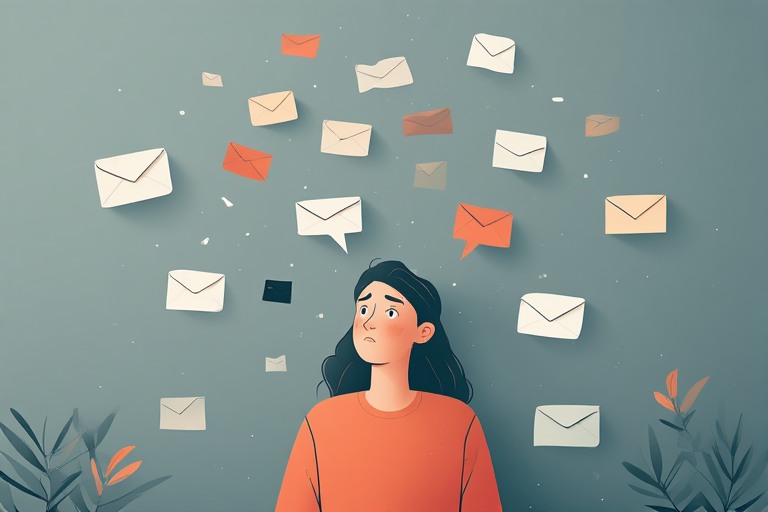
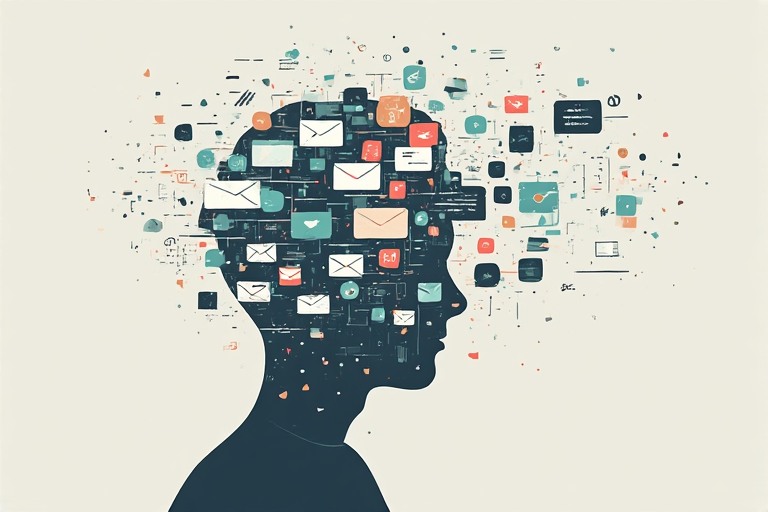
It’s important to recognize that digital clutter isn’t just about files or apps. It’s about noise. Lots and lots of digital noise. Emails, ads, updates, popups, and endless pings all create a low-grade stress known as information fatigue. Our brains were just not designed to handle the constant stream of data and pings being thrown at us.
This is due to Information Fatigue Syndrome. Yes, this is a real thing. It was first identified by Dr. David Lewis all the way back in 1996 and it’s related to chronic information fatigue.
So what does chronic information fatigue actually look like in daily life?
It’s when you’ve re-read that same email three times because nothing is sticking. It’s when you sit down to work and you feel busy all day, yet you accomplish almost nothing meaningful. It’s that heavy, foggy feeling that starts to settle in by mid-afternoon. That feeling you get, not because you worked hard physically, but because your brain has been processing an endless flood of input since the moment you woke up and checked your phone.
Our brains are constantly triaging. What should I respond to? What can I ignore? What actually matters? Over time, this leads to decision fatigue, anxiety, and burnout.
The worst part is, the more overwhelmed we feel, the more we tend to reach for our phones, which just compounds the issue as we scroll. We just fill our heads with more digital clutter as we continue looking for relief that never comes.
Clutter = Stress Signals
Whether it’s 1,000 unread emails or 50 open browser tabs, your brain perceives digital clutter as unfinished tasks. This in turn sends a stress signal that keeps your nervous system in a low-level fight or flight mode. You may not feel it immediate, it manifests as irritability, poor sleep, and reduced creativity.
This isn’t just a feeling — there’s a name for it. The Zeigarnik Effect, named after Soviet psychologist Bluma Zeigarnik, describes the brain’s tendency to fixate on unfinished tasks far more than completed ones. Zeigarnik discovered in the 1920s that waiters could remember every detail of an open order, but forgot it almost instantly the moment the bill was paid.
Your unread emails and open tabs work the same way — your brain keeps them alive in the background, quietly consuming mental energy until they’re resolved. Digital clutter, in other words, isn’t just visually messy. It’s cognitively expensive.
5 Ways To Reclaim Your Mental Bandwidth From Digital Clutter
I love digital minimalism because it offers a way out of the stress. It allows you to reduce your digital clutter and reclaim your mental bandwidth. But knowing is only half of the battle. I’ve been down this path before. I know it works. Here are 5 things that I’ve done to reduce digital clutter that can help you as well:
1. Audit And Delete Unused Apps
Have you looked through the app list on your phone lately? For a lot of people, it seems like a never ending list. Apps that have just automatically loaded themselves on every single time you switched phones.
Many of them that we haven’t opened in months. Some of them that we’ve never opened at all Each one of them just a silent passenger on our phones. More digital clutter that is just taking up space, running background processes, and sending out notifications that you’ve probably long since tuned out since they are just ‘always there’.
This is your cue. Set aside 10-15 minutes to scroll through the app list on your phone and ask yourself one simple question about each app:
Did I use this app in the last 30 days?
If the answer is no, then delete it. With the caveat I learned the hard way: Don’t delete apps required by the operating system like Settings or the App Store. You’ll be in for a bad time.
When you’ve removed all the apps that you no longer use, you’ll be surprised at how light your phone feels afterwards without all the extraneous digital clutter. Your home screen becomes so much calmer when it’s not this multicolored wall of icons competing for your attention.
2. Turn Off All Non-Essential Notifications
Notifications are the single biggest driver of context switching in modern life. Every single buzz, badge, and banner is your phone tapping you on the shoulder and saying “Hey you! Yeah you! This thing on my screen, it’s way more important than anything you are doing right now!” These notifications almost always incur that switching tax and are one of the biggest sources of digital clutter in our day to day lives.
Tell your phone that it’s not more important. Go into your settings and turn notifications for every app that doesn’t require your immediate attention.
One good rule of thumb: If it can wait until you choose to check it, then it doesn’t need to notify you. Alerts should be limited to calls, messages from real people, and calendar or task list reminders. Everything else should silenced.
3. Implement A “One Inbox” Rule for Email
Emails were meant to make our lives easier, but in reality they are a huge source of digital clutter. Often times, the digital clutter isn’t in the amount of emails you get, but how many different places that they live.
Think about how many different email addresses you have. Just thinking of myself, I know I have a lot. I have my primary email account, my work email account, my student email account, my spam email account, and then another email account I inherited as part of our HOA that will get passed on when my term is up. That’s 5 different accounts right there.
Plus I am sure that there are several others I’ve long forgotten about that may or may not still be active. Digital clutter from back before I adopted the digital minimalist lifestyle.
With multiple emails accounts, you get multiple email chains and unread folders spread across far too many locations for you to be able even hope to keep track of all the emails in them. This is digital clutter to the max!
Fortunately the solution is simple: consolidate everything into a single inbox. Then process it at certain times during the day. For most people twice is enough. Then aim to get to each email to zero before you close it.
You don’t have to respond to everything. You just have to make a decision about it: Reply, Delete, Archive, or Defer. What you can’t do is just leave it sitting there as digital clutter in an open loop in your brain.
Now a couple of important caveats here. When I say consolidate into a single inbox, I mean doing this through an email client. Realistically I have to maintain most of those emails I mentioned above separately and the separation is important. For example, my professors won’t accept things from my personal email. But having them all in a single email client allows me to quickly view everything and take action on them from a single spot.
Second, don’t mix your work email with your personal inbox. Keep them separate. Trust me. Your sanity will be better for it.
4. Use The Two-Minute Digital Declutter Habit
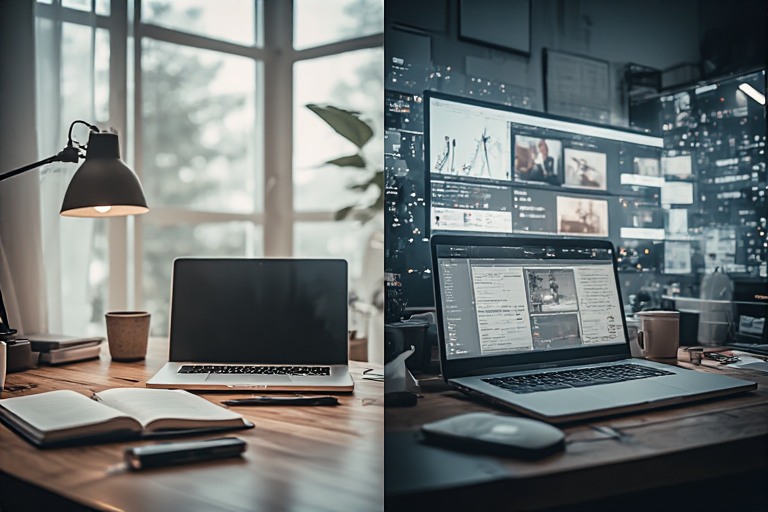
This one was seriously life changing. At the end of each day, take two minutes and do a quick digital sweep. This means closing all browser tabs you don’t need. Clear your desktop. Delete screenshots and downloads you no longer need.
Move files to their proper folders. I know this sounds too simple, but it’s got a very powerful cumulative effect. It makes it so that when you sit down the next morning, your brain doesn’t have to spend the first hour of energy trying to triage yesterday’s leftovers.
You start the day fresh with a long mental runway. Whether or not you end your previous day with the two minute digital declutter makes a huge difference in how productive and focused the rest of your day feels.
As a side note, I also do a two-minute physical declutter on my desk at the end of each day. That way I have a physically fresh and clean space to start my day and it makes a huge difference.
5. Create Tech Free Blocks In Your Day
It’s not good for us to be attached to our technology all the time. Your brain needs recovery time just like your body does after exercise.
When you schedule tech free blocks, which are periods of time where your phone is out of reach and your laptop is closed, you give your prefrontal cortex a chance to rest and reset.
When you do this, start small. Try giving yourself an hour in the morning before you check your phone. Or just keep your dinners tech-free. This doesn’t require you to go off the grid, you just need to give yourself enough distance from the noise to be able to think clearly.
Yes, the silence will feel uncomfortable at first, but within a few days that feeling will stop and the silence will start feeling essential.
Final Thoughts
Think of digital clutter the same way you would think of physical clutter in your home. Where physical clutter takes up space in your home, digital clutter takes up space in your mind. By cleaning up your digital life, you free up space in your mind. When you do, your brain will thank you.