
Digital minimalism was a philosophy that I discovered a few years ago. I was struggling with my mental health, I was overwhelmed, I was spending way too much time on my phone, especially on Facebook. During one of those long Facebook doomscroll sessions, something popped up on my feed from someone I actually knew for once!
One of my friends had started posting a bunch of stuff about minimalism and their journey. The idea intrigued me so I started digging into it and it eventually lead me to Digital Minimalism. The further I dug into these two philosophies, the further down the rabbit hole I went and I eventually learned that there is a third philosophy in this trio: essentialism.
Each of these philosophies shares similar roots but offers a unique path towards reclaiming focus, time, and peace in what has become a very cluttered modern life. I wish someone had provided me with the knowledge of what each of these philosophies was when I started down the digital minimalism path. Understanding what each of these is, how they differ, and how they work together can greatly assist you in your path to live more intentionally.
Today I want to provide just a brief overview of Essentialism, Minimalism, and Digital Minimalism. While I won’t go in depth into each of these, I want to provide you with enough knowledge that are able to apply the concepts in your day to day lives. Now I’m not saying that you have to become an Essentialist or a Minimalist, or even a Digital Minimalist. I just want you to understand the concepts so you can pick and choose what works best for you.
Essentialism: Doing Less, But Better

The root of Essentialism is about doing fewer things. In short, it’s the disciplined pursuit of what truly matters and the deliberate elimination of everything that doesn’t.
Essentialism was popularized by Greg McKeown’s book Essentialism: The Disciplined Pursuit of Less. The entire mindset of Essentialism focuses on choice and clarity. Essentialists don’t let urgency or obligation dictate their days, they choose purpose over pressure.
So what does essentialism look like in practice?
- Saying no to most opportunities so that you can say yes to the right ones.
- Blocking time for deep work and rest.
- Asking “Is this the most important thing I could be doing right now?”
Essentialism is all about focus. It is minimalism applied to time, energy, and effort.
One of the things that I loved the most about essentialism is how radically it reframes the word “no”. Society has conditioned us to say yes to pretty much everything. Yes to extra projects, yes to social obligations, yes to favors, yes to commitments. We’ve been trained that saying no feels selfish or unhelpful.
Essentialism argues the opposite. In McKeown’s book he argues that every time you say yes to something that doesn’t matter, you are saying no to something that does. This is a very subtle but powerful shift in thinking.
The Essentialism mindset also pushes back against the cult of busyness. As a long standing member of this cult, this one fully resonated with me. I fight with this every single day because we live in a culture that treats being busy as a badge of honor. This is beyond frustrating because from a very young age, it means that we treat boredom as some kind of mortal sin.
We are indoctrinated into this culture and it makes it extremely difficult to break from from the ‘you must always be busy’ mindset. Essentialism challenges the notion that if your calendar is packed and you are always exhausted, it must mean you’ve been doing something productive and important.
Being busy is not the same as being effective. Take a project I got assigned into to at work last year. I was asked to gather a small list of very specific data points from a large list of internal team members who largely didn’t know the answers and would defer me multiple times until I could get my answers.
This kept me extremely busy for the better part of a month. Sure, I felt productive but here is where the not the same as effective part comes in. Nobody in the multiple levels above me had bothered to check if they were the correct data points. I’m sure you can see where this is going. I was very busy, but I was not effective at actually accomplishing any of the actual project’s goals.
Doing more things does not mean you are doing the right things. The goal isn’t to get more done, it’s to get the right things done and then let go of everything else without guilt.
If you’ve ever ended the day completely drained but with the nagging feeling that you didn’t actually accomplish anything, essentialism might be exactly the framework you need.
Minimalism: Owning Less To Live More
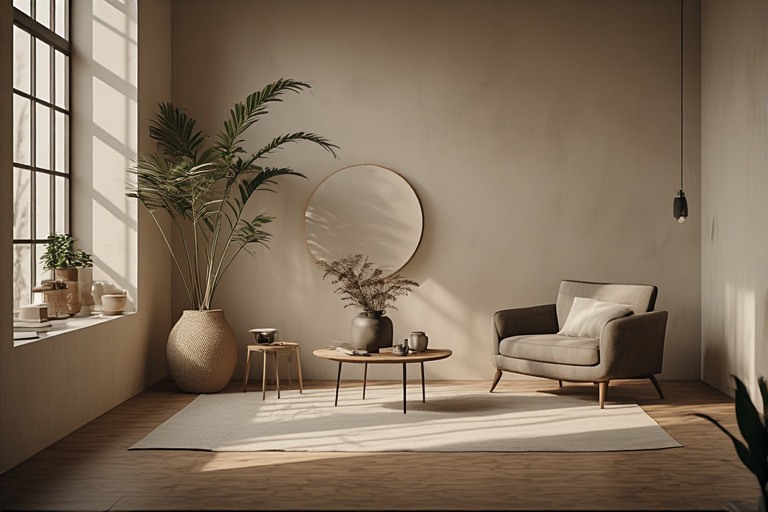
Minimalism is the most recognizable of the three philosophies. It’s often the gateway to the others. It was for me. And while I am definitely not a minimalist by any means, I do apply the concepts from it in my day to day life.
Minimalism is about intentionally reducing physical possession to make space for what truly brings value. It’s not about deprivation. It’s about freedom. I personally consider it decluttering taken to the max. Essentially, every item you own demands attention, maintenance, and space. By owning less, you reclaim more.
So what does minimalism look like in practice?
- Clearing your home of unused or unloved items. Marie Kondo was onto something when she asked “Does this spark joy?”
- Reducing spending on impulse purchases.
- Designing your environment for calm and clarity.
While Essentialism declutters your schedule, Minimalism declutters your space.
What I find the most compelling about minimalism is how physical clutter creates mental clutter. Walk into a room that is messy, overstuffed, and disorganized and notice how you feel. Now walk into a clean, open, intentionally arranged space. The difference in how your brain responds is immediate and real. Our environments shape our mental state more than many of us realize.
I can provide a very personal example about how environments shape our mental state. I grew up in a hoarder house and had hoarder tendencies for a very long time. When I got out on my own, I broke myself of those hoarder tendencies, but the mental damage that was caused by growing up in that hoarder environment is something that may never be able to be undone.
Now if I enter a messy, overstuffed, and highly disorganized room, I sometimes have panic attacks. When my own home starts to get too messy, disorganized, or dirty, my mental state gets completely broken. Just ask my wife or friends about me and either ants or flies getting into the house and they will be able to tell you just how strongly the environment impacts my mental state. There is a good reason why my office and our house in general is extremely clean and organized. If it’s not, I can’t focus at all.
Now Minimalism does not mean you have to live with white walls, one chair, and a single fork. That’s a very extreme version that gets all the attention. In practice, minimalism can simply mean being more intentional about what you bring into your life and being honest about what actually adds value versus what is just taking up space.
This could mean finally donating clothes you haven’t worn in three years, clearing out the junk drawer (no judgement, I’m pretty sure the junk drawer is an essential part of every home’s existence and the house will implode on itself without it), or stopping the habit of buying things to fill an emotional void.
The financial side of minimalism is also worth mentioning. When you stop buying things you don’t need, you spend less. This means less financial stress, more savings, and more freedom to spend on experiences on things that genuinely matter to you. Minimalism at its core is a long game toward a better quality of life.
Digital Minimalism: Intentional Tech In A Noisy World
Digital Minimalism is cool because it takes the principles of both Essentialism and Minimalism and applies them to our digital lives.
It was coined by Cal Newport. If you haven’t read his book on Digital Minimalism, I highly recommend it. It’s a fantastic read. Digital Minimalism is a philosophy that challenges us to use technology on purpose. Rather than letting our devices and apps consume our time, Digital Minimalism encourages us to use technology as a tool, not a lifestyle.
So what does Digital Minimalism look like in practice?
- Deleting apps that don’t add real value.
- Setting boundaries around screen time.
- Prioritizing real-world connection over digital noise.
Where Essentialism clears your schedule and minimalism clears your space. Digital minimalism clears your mind.
This one hits close to home for a lot of people right now…and with good reason! Americans now spend an average of over 5 hours per day just on their phones — and that number keeps climbing. That’s not an accident and it’s not a personal shortcoming.
The apps on on your phone are designed with one thing in mind. Keeping you engaged by scrolling, tapping, liking, reacting, and posting. Whatever it takes to keep you coming back for more.
This known as the variable reward loop, which means you don’t know what you’ll find next. It’s the same mechanism that makes slot machines so addictive. You are not weak for struggling with your phone. You are up against a machine that is rigged against you.
Digital minimalism ask you to take a step back and evaluate your relationship with technology honestly. Which apps are actually serving you? Which apps are just consuming your time and attention without giving you anything meaningful in return?
Newport suggests a digital declutter. This is a 30 day period where you step away from optional technologies and then only reintroduce the ones that genuinely serve your values. It’s a hard reset.
Personally I find this to be a bit extreme, but I can’t deny how incredibly effective and eye opening it is.
How These Three Philosophies Work Together
You’ll notice these three things all work together and complement each other. Together they form a very powerful framework for intentional living. One where you aren’t just simplifying, but creating a life where your time, space, and focus all align with your values.
Think of it this way: Essentialism asks what matters most? Minimalism removes the physical noise so that what matters most can take the center stage. Digital minimalism removes the digital noise so that your attention, which just happens to be your most finite and valuable resource, can actually go towards the things you have decided matter.
These all share the common belief that more is not always better. That relentless accumulation things, commitments, and content is quietly stealing the life you actually want to be living. Each philosophy in its own way is a form of resistance against that and can help you reclaim your life.
You Don’t Have To Go All In
These all share the common thread of making more room for what matters most in your life. I’m not saying you have to go all in on every one of these philosophies. Let’s be real, it may not be possible for most people to do so. However, you can absolutely use these ideas as a framework to make your life better.
Maybe you start by uninstalling three apps that you mindlessly scroll. Perhaps you finally clear out that closet that’s been bothering you for ages. Maybe you just start saying no to that one commitment every week that you’e been agreeing to out of obligation. None of these things require you to label yourself a minimalist, an essentialist, or even a digital minimalist. They just require a small intentional shift.
That’s the great thing about frameworks, you can choose what works for you and discard the rest. Because as long as it improves your life, if only in a minor way, it is a success.
Start small. Be intentional. Remember, the goal was never to have less, but to have more of what actually matters.