

The multitasking myth is one of the biggest shams in modern productivity culture. We constantly hear people boasting about juggling emails while on calls, streaming podcasts while working, or flipping between multiple browser tabs in the name of efficiency. Yet, somehow multitasking has become a badge of honor. It’s a signal to everyone around you that you are busy, capable, and relentlessly productive.
Here is the hard truth. Multitasking is just doing several things at the same time poorly. You are fracturing your focus without adding real productivity. It’s just an illusion. People who say they are excellent multitaskers have confused being busy with being effective. The great multitasking myth has convinced multiple generations that more is better, while evidence points firmly in the opposite direction.
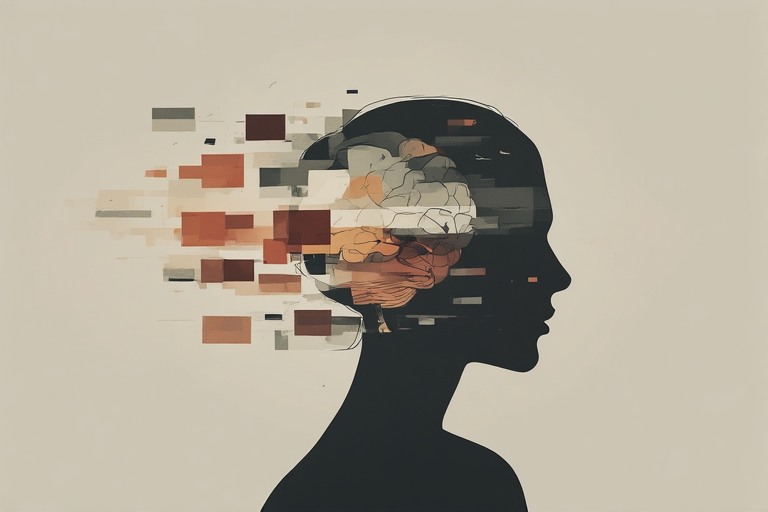
The Brain Isn’t Built For Multitasking
Many of us manage to paint ourselves a pretty convincing picture that we can multitask. I know I did for many years. Then I had kids and I learned about the multitasking myth. Largely from my key experience in understanding that I absolutely cannot multitask with little ones under my feet.
The human brain just simply isn’t designed for performing multiple cognitively demanding tasks at once. What we are actually doing is rapidly switching between tasks through a process known as task switching.
Each switch comes with a cognitive cost. This is a kind of mental toll that your brain pays every time it has to drop one context and pick up another. Some of these costs are relatively minor. If you are watching a TV show while walking on the treadmill or doing the dishes while listening to a podcast, your brain is managing two tasks that pull from different cognitive resources. One is largely automatic while the other engages attention in a shallow way. The toll is still there but it’s manageable.
Other combinations are far more damaging. Have you ever tried to compose a thoughtful email while staying present in a meeting? This forces your brain to compete for the same pool of focused attention. You can’t split your focus evenly between the two, which results in you losing meaningful comprehension of one or both of those two tasks.
Research has consistently shown that these micro-switches reduce accuracy, slow reaction times, and increase perceived stress levels. What feels like a flurry of productivity is actually a cycle of mental fragmentation.
Getting caught by the multitasking myth has caused me to have to do all sorts of rework at the office. On multiple occasions while I was working on an important email and trying to respond to a coworker or put out some kind of fire I have found that I made some kind of major error ranging from putting in the wrong deadline to completely attaching the wrong file. The result made me look bad and forced me to do a lot of rework.
What’s worse about getting sucked into the multitasking myth is that over time, the cumulative cost keeps compounding. The more we switch, the more cognitively fatigued our brains become. This means it’s harder to settle into the deep, focused work that produces our best output. It creates an illusion of productivity while eroding our overall capacity for concentration in the long term.
Digital Multitasking: It’s A Trap!
Each of our devices has been specifically engineered to exploit our belief in the multitasking myth. All of our devices send us notifications and messages, social media feeds beg for us to constantly scroll and refresh. Every one of these competes for our attention, interrupting whatever we were doing and forcing our brains to reorient itself again and again. All of these interruptions are like a slot machine, except it provides dopamine. It is both exhausting and deeply addictive.
Digital multitasking has measurable consequences. It shortens attention spans, weakens working memory, and quietly chips away at our creativity. Studies have shown that chronic multitaskers tend to perform significantly worse on tests of focus, filtering irrelevant information, comprehension, and task completion than those who focus on single tasks. The cruel irony is that those heavy multitaskers often believe that are better at it than everyone else!
We are currently living in the attention economy. Technology companies have spent billions of dollars and decades of research learning how to fracture your focus and keep you in a state of shallow engagement.
Every time you glance at your phone mid-sentence to find out why it’s buzzing, every time you glance at a notifications while writing, every time you toggle between multiple open browser tabs, you are handing over a small piece of your attention and cognitive capacity to a system that is designed to harvest and exploit it.
What Task Switching Actually Costs You
Let’s put some numbers and names to this. Cognitive scientists call the performance drop that happens when you switch between tasks switching cost, and they call the lingering mental residue from the previous task attention residue. Even after you stop doing one thing and start another, part of your brain is still processing the first task. Your brain remains half-engaged, still drawing down your attention.
This is why it is so hard to write well right after you have been answering emails for a while. Whatever the tone and urgency was, whatever open questions you may have had, they are all still there in your brain. They follow you onto that blank document and clutter the space where your ideas should be forming.
Cal Newport, who wrote extensively about deep work, describes this as the modern knowledge worker’s central productivity problem: we have structured our entire work lives around the very habits that destroy our ability to do meaningful work. We check messages compulsively, we keep communication channels always open, and then we wonder why our thinking feels shallow and our days feel full but empty.
The cost of task switching is not just about the seconds lost in the transition. It is about the quality of thought you can no longer access because your brain never fully settled into the task in the first place.
Rejecting the Multitasking Myth: Do One Thing Well.

So here is my radical proposal. Ready for it? Do one thing and give it your full attention.
This isn’t laziness. This is not a lack of ambition. it’s mastery. When we give a task our full attention, we enter a state of flow. We enter a state where thoughts connect fluidly, output gains quality and depth, and you can even lose track of time. Flow is not a luxury reserved for artists and writers. It’s available to anyone willing to protect the conditions that allow it.
If this sounds easy, it’s because it really is. Realistically, this is just small acts of deliberate restraint. This means checking emails two or three times a day at scheduled intervals rather than every time a notification hits your phone or closing all your extra browser tabs except the ones you actually need. This could also mean placing your phone in another room or in your bag so that it’s not constantly interrupting you while you work. The most important act you can take though is to set one single, specific goal for a focused work block before you begin.
None of these things are difficult to do. None of them require dramatic life overhauls. Each one is a very small and specific choice you are making to say I won’t give in to the multitasking myth. Each one of these actions creates space for clarity, creativity, and calm and is a direct rejection of the myth that divided attention is somehow more efficient than concentrated attention.
Single-tasking As A Competitive Advantage
We live in a world that is absolutely enamored by the multitasking myth. Where everyone is distracted pretty much all of the time and the ability to focus deeply on one thing has become a genuinely rare thing. Rare and valuable skills tend to get noticed and produce visible results.
When you give things your full attention, it shows. Just looking back through my previous weeks at work, I can tell which days that I was single-taking and focused and which days I was forced to try and multitask.
Those days where I was singularly focused produced higher quality writing of emails, documentation, and everything else I needed to write. I could tell I wasn’t half-monitoring my email inbox during meetings because my meeting notes reflect things that other people missed.
Single-tasking allows you to think through a problem without interruption and enables you to arrive at solutions that surface-level thinking pretty much never reaches. Deep focus is not just better for your well-being. It’s a competitive advantage in almost any field.
I work for a large organization and even though I am not in management or any level of authority, many members of leadership know who I am. Why? Because I am able to single-task and deep focus on things. This in turn means that I am producing work that stands out above the rest and get results.
Professionals and creators who produce stand-out work aren’t the ones who are the most responsive, the ones who are always on, or the ones who most impressively look always busy. They are the ones who have learned to protect their time and treat their attention as a finite resource.
How To Start Breaking The Multitasking Habit
Now that you are familiar with the multitasking myth, the next step is to break yourself from it. Now admittedly, this isn’t an easy habit to break. We have been indoctrinated into the idea that multitasking is a good thing for our entire lives. That’s not a habit that you just break in a few days. I wish it was because it would make life so much easier. It requires a few consistent habits practiced until they become the default.
Reframe Your Environment
Reframing your environment is one of the biggest factors in breaking the multitasking habit. Notifications are the biggest enemy of focused work. Turn off anything that is non-essential. Close out unnecessary tabs. Keep your phone out of reach when you need to think. If you remove the triggers, you won’t need willpower to resist them.
Protect Your Time
You want to protect blocks of time. At work I have one to two scheduled 60-90 minute blocks on my calendar every single day that I don’t allow people to schedule meetings over. At home I generally have a block of time of about 90 minutes every day that I use for taking care of various tasks that I want to get done in my personal life. It’s not the same task every day, but it’s a focused task that I want to focus singularly on.
Scheduling these blocks will transform your output over weeks and months. You want to guard those blocks as if they are the most important meetings of your day and use them for single focus.
Be Honest With Yourself
This one sounds a bit cliche, but it’s very important. You want to be honest with yourself about what actually counts as multitasking. For example, music is one of those kind of grey areas when it comes to multitasking. Some people consider it multitasking, some don’t.
Personally, I come down on the side of background music that is largely without lyrics is probably fine, maybe even helpful. Especially if you work from home and have a neighbor who is absolutely in love with their leaf blower, music is way better.
On the flip side of that, trying to listen to a Podcast while editing a technical document is definitely multitasking. That is two competing language processing tasks competing for the same resources in your brain. Not all combinations are equal, but most of the ones we rationalize are costing us more than we like to admit.
The Hard Lesson We All Need To Learn
The great multitasking myth tries to convince us that more is better. It pushes the idea that the person juggling he most tasks and who seems the most busy is the most productive. In reality, that is pretty far from the truth.
Doing one thing well beats doing several things poorly, every single time. You do your best work and get your best results when you have a focused mind directed on a single task. The multitasking myth has had a long run, but now it’s time to stop believing it.