
When you scroll through your phone, there is a high likelihood that you will see pages of apps that you don’t remember downloading, that you rarely open, or that you “might need someday”. App clutter is one of the most overlooked sources of stress in our digital lives, and most of us don’t even realize it is happening.
I remember back in the early days of the App Store hearing the slogan There’s an App For That! This engrained into our heads that more apps means more productivity, more entertainment, and more convenience. The reality is quite the opposite. Every extra app competes for your attention, your data, and your peace of mind.
With digital minimalism, you ask a simple but uncomfortable question: Do I really need all of this?
What Is App Clutter?
App clutter is what happens when your phone fills up with apps that you downloaded with good intentions, but rarely or even possibly never actually use. It was popularized as a concept by Cal Newport, who wrote the book on Digital Minimalism.
Newport argues that our relationship with technology should be built around our values, not around the apps and platforms that are engineered to keep us hooked. Digital minimalism isn’t about going off the grid, but instead being deliberate and intentional about our technology use. It means choosing tools that serve your life rather than ones that slowly consume it.
When it comes to app clutter specifically, digital minimalism asks you to look at every app on your device with fresh eyes and ask a single question:
Does this app genuinely make my life better?
Why Do We Have So Much App Clutter?
In the early days of the App Store, collecting apps was a bit like collecting Pokémon. We had to collect them all. I remember that there were free app giveaways at Starbucks every week and we’d make the trek down the street just to collect our free apps whether we needed them or not. There were app advent calendars. We thrived on having as many apps as possible.
We are well beyond those early novelty days. Now apps play on the powerful myth of I might need it someday. Fear its one of the strongest drivers of app clutter. It’s the fear of being unprepared. The fear of missing out. Even as someone who regularly declutters my apps, I still have apps that I keep because I might need them.
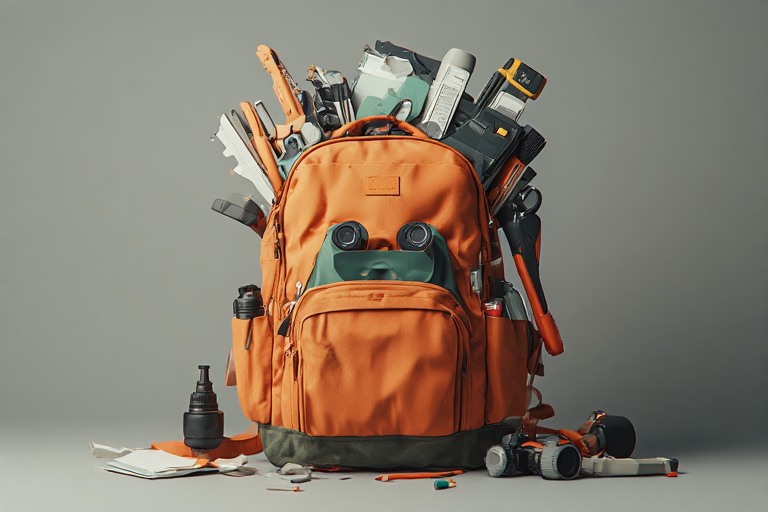
However, it’s important to remember that apps aren’t heirlooms, they are tools. If you genuinely need it later, it can generally be reinstalled within a few seconds. So keeping apps just in case is like carrying every tool you own in your backpack every single day. It’s exhausting and unnecessary, and it slows you down.
Each app that you keep comes with the promise. The promise of saving time, improving your health, boosting your focus, keeping you connected, or any one of a million other promises. Most of these apps exist to solve problems that your devices already do very well.
For example, having separate apps for notes, reminders, scanning, weather, habit tracking, and journaling all sounds helpful. Then you realize that your phone can do most of this natively, with fewer distractions and tighter system integration. At the end of the day, you’ve been sold solutions to problems you didn’t actually have.
All those extra apps are exhausting. They are redundant. If you have two apps that do the same thing, the simpler one usually wins out because it stays out of the way. The rest of them just cause fatigue. They send notifications, they sit in your peripheral vision as reminders of things you aren’t doing. They nudge you with badges and alerts. Yet, we keep them. Even if we aren’t using them. Just in case.
What App Clutter Actually Costs You
Most of us tend to think of unused apps as harmless. I mean, they are just sitting there right? What’s the worst they could do? But app clutter carries a real cost, and most of it isn’t measured in storage space.
Mental bandwidth.
Every app on your phone occupies a tiny corner of your mental real estate. You may not be consciously thinking about your unused meditation app, but your brain registers it every time you scroll past it. Researchers refer to this as the Zeigarnik effect — the tendency for unfinished or unattended tasks to linger in working memory. Apps you downloaded with good intentions but never use become a low-grade source of guilt and mental noise.
Notification overload.
The average smartphone user receives dozens of notifications per day. Many of those come from apps that have no real business interrupting your life. Each interruption, no matter how small, breaks your focus and takes time to recover from. Studies have shown it can take over 23 minutes to fully regain deep focus after a single distraction. Multiply that by the number of pointless alerts you receive daily and you begin to see how much cognitive energy is being silently drained.
Data and privacy.
Every app you install is a potential data collection point. Many free apps monetize by harvesting your usage patterns, location, contacts, and browsing behavior. The more app clutter you accumulate, the larger your digital footprint and the more of your personal data is out in the world, often being sold to advertisers you’ve never heard of.
Decision fatigue.
Having too much app clutter means having too many choices every time you pick up your phone. Where do I take notes? Which to-do app should I use today? Should I check this app or that one? Every small decision depletes your mental energy. Fewer apps means fewer decisions, and fewer decisions means more energy for the things that actually matter.
The Power Of Clearing App Clutter
Let me make one thing very clear before we go further. You may hear people tell you otherwise, but digital minimalism is not about having the fewest apps possible. By that same token, when taking on the task of clearing app clutter, don’t set your goal as having the fewest apps possible.
It drives me crazy when people act like the digital minimalism police because they feel like you have too many apps. Digital minimalism is about having the right apps to support your life and your values. That means that if the right amount of apps for you is 30 then great. If it’s 150 that is fine too. Nobody is going to give you a trophy for having the smallest app count.
The real goal is intentionality. If an app doesn’t clearly support your values, save you meaningful time, or improve your wellbeing, it probably doesn’t deserve space on your device. When you clear app clutter and build a smaller and more curated ecosystem, it forces clarity. You know exactly why each app is there and what it’s for. When an app no longer serves a clear purpose, it makes it much easier to remove it and free up space on your device. It will free up mental space as well.
I love having fewer apps because I know that I’m never having to hunt around for that one app that does what I need it to do. I know what apps I have, where they are, and what they do. This is powerful and efficient. It also means that I have far less apps that are constantly interrupting me, trying to pull me back into them all the time, and there are less apps constantly trying to get me to subscribe, upgrade, or re-engage with them. I simply use my tools and I put them down.
How To Actually Start Clearing App Clutter
Let me introduce you to the biggest single mistake people make when deciding to tackle their app clutter:
Going all in at once.
Just like trying to tackle physical clutter, going all in at once is setting yourself up for failure. You sit down, you scroll through every single app. Then you second guess everything. An hour later, you’re exhausted and you’ve only deleted three apps. I’ve been there, done that, got the t-shirt. I learned this approach doesn’t work.
Instead, I recommend starting small. Just delete maybe two or three apps that you haven’t opened in months. Start with the most annoying ones. You know the ones I’m talking about. Those apps that interrupt you all the time, the ones that guilt you, and the ones that send you all those notifications that you never wanted.
Delete them and just sit with it for a few days before performing any kind of a larger task at clearing your app clutter. Notice how it much less stressful it is not being pinged by them all the time. Enjoy that small sense of relief. Then, do a few more.
I like to ask two questions when evaluating the apps on my phone:
Would I download this again today if it weren’t already on my phone?
If the answer is no, then that probably tells you everything you need to know and you should probably just get rid of it. The second question is:
What problem does this app solve and does that problem actually exist in my daily life?
If you can’t answer that question clearly, it’s contributing to app clutter and probably not earning its place.
A few other practical tips to help you on as you start to tackle your app clutter:
- Audit your home screen first. Only apps that you use every single day belong there. Everything else can live in other folders or be deleted entirely.
- Turn off notifications by default. Don’t ever give apps a chance to annoy you. Every time you install a new app, go into the settings and turn the notifications off. You can always turn them back on later if you decide they are genuinely useful.
- Use your phone’s built-in tools. Before you download a new app, ask whether or not the phone’s native apps can already handle it. More often than not they can. I’ve wasted a ton of time on third party apps that promise to do things better than the native apps on my phone only to eventually return back to where I started with the default apps.
- Do a monthly review. Once a month just spend five minutes scrolling through your apps. Anything you haven’t touched since your last review is contributing to app clutter and is a candidate for removal.
The Clarity Is Worth It
You’ll quickly discover that clearing app clutter doesn’t require adding anything to your life. You don’t gain clarity and freedom by adding more apps. You gain it by letting things go.
Your phone is one for the most powerful tools you own. While it can do amazing things like connecting you to those you love, creating art, building businesses, and it has the capacity to teach you pretty much anything, your phone can also be overwhelming. When app clutter becomes too much, it chips away at your focus, time, and peace of mind.
So start small. Delete two apps today and see how it feels. The clarity that follows may surprise you.