
Last Update: May 30, 2026
The idea of intentional technology use came into popular culture as part of the digital minimalism movement. Depending on which milestone you use, this movement started between 10-15 years ago. Personally, I use Cal Newport’s Deep Work as my marker. This was the book that gave language to something that a lot of us had been feeling, but couldn’t quite name. That feeling that there are too many notifications, too many apps, too little focus, and too little life.
The early message of digital minimalism was simple: Use less tech. For a while that was enough. However, I’ve been wrestling with a new question lately: what happens when “use less” isn’t sufficient anymore?
In the technology landscape, 10 years is an eternity. Our devices have gotten more powerful, more embedded, and more persuasive. I’m seeing technology that I was able to kind of rig together as a kid because it was stuff I’d dreamed of being the future becoming seamless and commonplace in my life. Technology change is rapid and constantly evolving, so our philosophies around digital minimalism have to evolve with it.
The answer to this isn’t to abandon technology. That simply isn’t an option anymore. Instead, the answer is intentional technology use. It’s all about deliberately deciding what role each tool plays in your life rather than letting it decide for you. Here are the six shifts I see defining where digital minimalism is headed.
1. From Reduction to Alignment
f you haven’t read Deep Work or Digital Minimalism by Cal Newport, I highly recommend you go grab a copy from the library. They are both fantastic reads and completely worth your time.
What you’ll notice about them is that the first wave of digital minimalism focused almost entirely on subtraction. It was all about deleting apps, turning off notifications, and doing digital detoxes. These steps aren’t wrong. In fact, they remain critical parts of digital minimalism. However, they are no longer sufficient on their own.
As digital minimalism evolves, it has shifted from how much technology we use to why we use it. Thus instead of asking the question: Can I live without this app? The new question being asked is Does this app support my values, responsibilities, or relationships?
One question is about deprivation, while the other is about intentional technology use, which is a much more durable foundation to build on.
I first discovered digital minimalism about 5 years ago and I’ve watched the evolution happen in real time and I’ve had to evolve my personal habits with it. Several years ago, I downloaded an app to learn a different language. It was well meaning and I really did want to learn.
Four years later, I had opened the app approximately three times. It made it through two phones and I still had it. I was just keeping it out of habit. I finally asked myself whether it supported anything I actually cared about and I had to be really honest. It had been four years, the answer was very obviously no.
So I finally deleted it and it felt different from the other cleanups I’d done. This one wasn’t about discipline of cleaning up apps, it was about noticing a mismatch between what I was carrying around and what I was trying to build. Learning a foreign language was no longer a priority in my life, my new life revolved around my kids and my family and removing this was the kind of alignment that I needed to be making.
2. Calm Tech is Becoming the Standard Worth Caring About
The biggest forces driving technology these days are AI, automation, and ambient computing, the idea that technology is woven into everything around us. This shift changes the nature of the problem. It’s no longer primarily about screen time, but cognitive noise. Cognitive noise is the cumulative mental overhead of tools, alerts, and decisions that never let you fully settle into a thought.
A big part of intentional technology use is choosing calm technology. Calm technology refers to tools that work at the edges of your attention rather than demanding the center of it. These are tools that wait for you. Tools that inform you without interrupting.
For anyone who is committed to intentional technology use, calm tech is a lens that separates genuinely useful tools from digital clutter. These are tools that are worth keeping because they work quietly in the background, reduce decision fatigue, and respect your attention rather than exploit it.
3. Personalized Systems will be Key
When I first discovered digital minimalism, it was largely a collection of prescriptive, one size fits all lists. Generally they were some variation of delete social media, use a dumb phone, and only check email twice a day. There’s nothing wrong with this approach and some of these things I even recommend myself.
Those rules work great for some people. Others who adopt them wholesale feel like failures when they didn’t stick and they give up on the whole philosophy. This wasn’t a problem with their discipline, it was because they were borrowing a system built for someone else’s life.
The next phase of digital minimalism is going to be deeply personal. Intentional technology use looks very different for a night shift nurse than for a remote creative director. Similarly it’s going to look very different for a parent of two young kids than for someone who lives alone. Systems are going to be tailored to energy levels, work rhythms, mental health needs, and family lives.
This is one of the genuine strengths of digital minimalism. It’s very adaptable, but that strength only shows up when people stop trying to replicate someone else’s setup and start designing their own.
I know people who have taken on digital minimalism and they’ve switched to dumb phones. If I tried that, I would be so infuriated by my day to day life that I would probably give up on digital minimalism altogether. I need that constant access to my email for work, the access to trails for our hikes, for my kid’s school to be able to get a hold of me at a moment’s notice.
Going from a smart phone to a dumb phone is part of someone else’s system, not mine…and that is perfectly ok. I know this from paying attention to how my life functions, not from just purely copying something that worked well for someone else.
4. Fewer Platforms, Clearer Roles – Not Fewer Devices
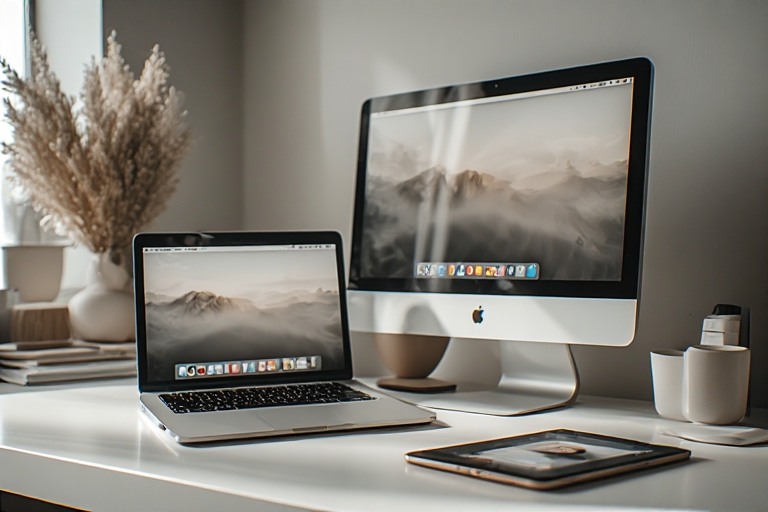
If one thing is abundantly clear, we are not moving into a world of fewer devices. Instead of just having a phone and a laptop, now we have tablets, Smart Watches, AirPods, fitness trackers, smart glasses, and even smart rings. Technology is everywhere.
Instead of having fewer devices, the future of digital minimalism will be more focused on creating clearer roles for each one. So instead of one device to rule them all, we are starting to see a trend of dividing the roles up. For example, one device for creation, one for communication, and one for intentional consumption. This creates boundaries between different contextual use of the devices, which is a key tenant of digital minimalism.
5. Digital Literacy: The Real Foundation of Intentional Technology Use
Willpower as a foundation of digital minimalism was never something I was never particularly thrilled about. Largely because I recognize that humans in general are not that great at self control. Myself included, otherwise I probably never would have had to learn about digital minimalism in the first place.
Willpower is a limited resource and apps are being built by people whose entire job is hold your attention and break your willpower so you stick with the app even longer. Blaming yourself for not being disciplined enough to put your phone down is like blaming yourself for eating your favorite food when someone places it in front of you. The environment did most of the work.
Sustainable intentional technology use isn’t built on self-discipline. It’s built on smarter defaults. This means understanding the design of apps so you can recognize when they are trying to hook into the app for longer. Choosing tools that don’t monetize your attention. Setting friction between yourself and the apps where it helps.
When you make the path of least resistance the one you actually want, you stop fighting yourself. You let the environment do the work instead of your willpower, which is ultimately much easier to sustain.
6. Meaning over Metrics
I love data and metrics. So much that I’ve built my career on it. The fact that I can so readily get metrics on so many aspects of my life is game changing. My watch has helped me get ahead of some potentially serious health issues when I gave the data to my doctor, my screen time showed me patterns that I wouldn’t have noticed otherwise.
Metrics when used thoughtfully are an amazing tool. I can honestly say the metrics I’ve gotten from my devices have helped with my health, both physically and mentally. However, as more of life is tracked, measured and optimized, digital minimalism will act as a counterbalance. Not against the data itself, but against the assumption that if something isn’t measured, it doesn’t count.
Intentional technology use means being deliberate about what you track, not just how much. In this next phase, digital minimalists are caring less about streaks, analytics, and engagement numbers. The focus is turning to presence, depth, mental clarity, and time well spent. Not everything valuable needs to be quantified. In fact, the act of measuring something quite often subtly changes your relationship to it.
Intentional Technology Use is the Future of Digital Minimalism

As more people adopt digital minimalism, it’s becoming clear that it’s more than just a productivity trend or a burnout reaction. It’s a growing and maturing philosophy. One that started as a protest against excess and is evolving into something more nuanced, personal, and durable.
It’s not about a nostalgia for a pre-digital past. I remember learning how to drive using a Thomas Guide and getting on the Internet using 14.4 dial-up that tied up our house’s single phone line for hours on end. I don’t miss those days.
Intentional technology use is all about deciding in advance what role each tool plays in your life, rather than letting it decide for you. That’s a question worth revisiting as both the technology and your life keep changing.
Start with one question: does this tool support what I actually care about? That single shift from passive consumption to intentional technology use is doing most of of the work that digital minimalism is built on.